
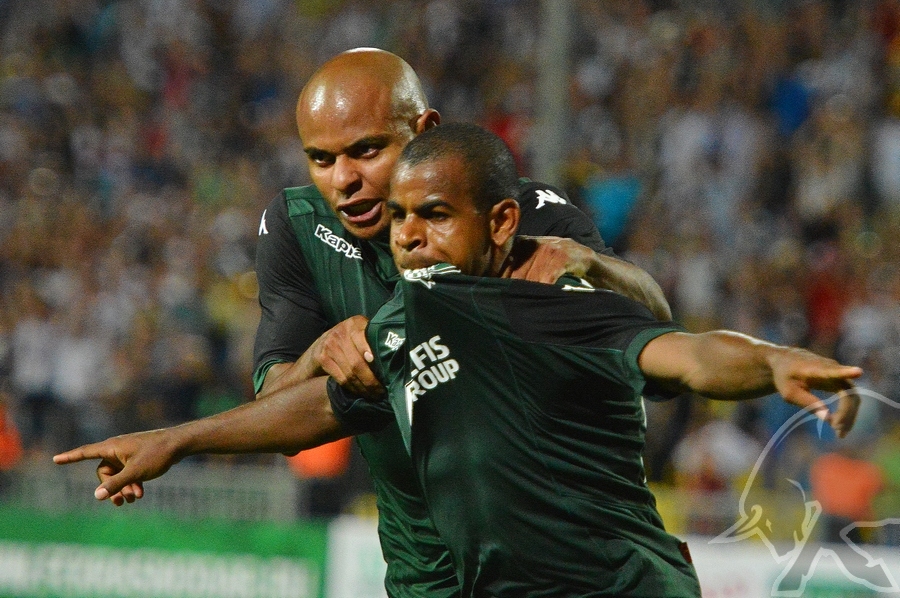
It was no coincidence when FC Krasnodar eliminated Spanish side Real Sociedad in Europa League qualification with a 3-0 victory at home. Rather, it was the culmination of seven years of hard work from one of Russia’s most exciting new clubs.
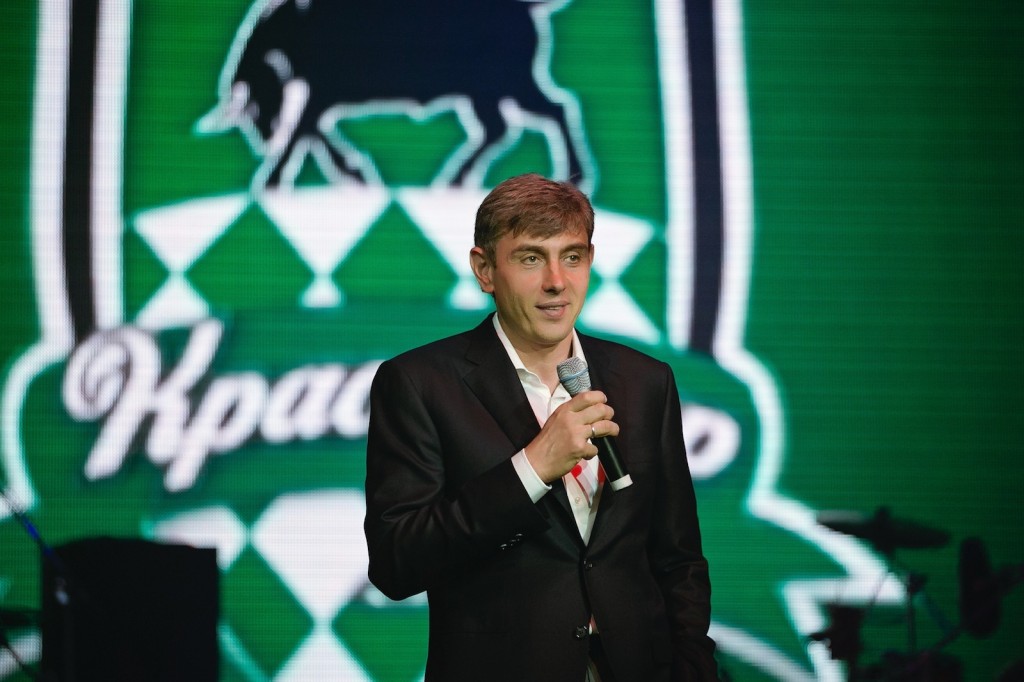
The man behind the club is local billionaire Sergey Galitsky, who with his fortune of almost 11 billion dollars is the 138th richest man in the world according to Forbes. He created his first fortune by selling perfumes and cosmetic products in the early 90’s, but he had to wait until 1998 when he founded the retail chain Magnit before he really made it big. Magnit is now the biggest retailer in Russia and they open several hundred new stores all over the country every year. Magnit is often compared to the American chain Walmart because of their low prices and focus on the consumers in the lower middle class.
Galitsky is one of the few Russian billionaires who live outside Moscow, a fact he loves to point out, and can always be found at Krasnodar’s home games. He also spends a lot of his time at Krasnodar’s youth academy, visiting often. He’s even pitched in as a TV commentator for youth games in the past.
It’s easy to find him on the internet, too, as he’s an avid Twitter user, using it to communicate with fans and provide updates from the club. He says it in almost any interview he gives, and his Twitter account proves it: Galitsky is crazy about football and chats almost every day with football fans about his team, Russian football as a whole and plenty of other European leagues, too.
That passion helps explain why Galitsky was happy to take his time building Krasnodar from the ground up, content to enjoy each step in the process. The club’s dramatic rise began in 2008 when they received a license to play in the third tier Second Division. For their manager, they chose the inexperienced Vladimir Volchek, who used to coach Torpedo Moscow’s reserve squad. Even though Volchek only lasted six months as Krasnodar’s head coach their young squad still managed to finish the season in third place, which gave the club its first set of medals. Unfortunately, third was not enough to secure them a promotion, but when several clubs withdrew from the first division FNL because of financial problems, they got their promotion after all. Krasnodar would finish the following season in a respectable 10th place. One of the most memorable moments of the season was a 5-1 victory at home against former Russian champions Alania Vladikazkay in the last match of the season.
During Krasnodar’s second year in FNL, they hired former Lokomotiv Moscow and FC Khimki coach Slavoljub Muslin. With the Serbian Muslin as coach, the club and players quickly began to develop, and Muslin started to implement the attacking, direct style of play that characterizes the club today. The quick progress helped Krasnodar finish in fifth place and they even reached the quarterfinals in the cup. Fifth place was not enough for Krasnodar to earn promotion, but when FC Saturn withdrew from the Premier League because of financial problems, the young club earned another “free” promotion.
As preparation for the first season in the Premier League, Krasnodar had to invest in new players, and a big part of the squad was replaced. According to transfer portal Transfermarkt, they spent €8,74 million on new players, among those current Spartak Moscow striker Yura Movsisyan and the Brazilian Joãozinho. They bought Movsisyan from small Danish side Randers FC and Joãozinho was signed from Bulgaria’s Levski Sofia. Both players made a huge contribution to Krasnodar’s impressive 9th place finish in the Premier League. It was during this season that Krasnodar got its first derby win, beating local rivals Kuban Krasnodar 1-0 away in front of 26,000 fans.
Since the founding of the club, Galitsky has invested heavily in the club’s facilities. In the fall of 2009, he built an ultramodern training facility, Chetuk, and the next year he invested €64 million in the construction of the club’s football academy .The academy, which is the best in Russia, includes a library, sport halls, swimming pools, medical centre and eight buildings for student residences. Galitsky has also made several indoor artificial pitches, so that players can practice in Krasnodar year round. More than 3,000 children and teens between the ages of 5 and 17 play football at the academy, and it is only a matter of time before the first players from the academy reach the first team.
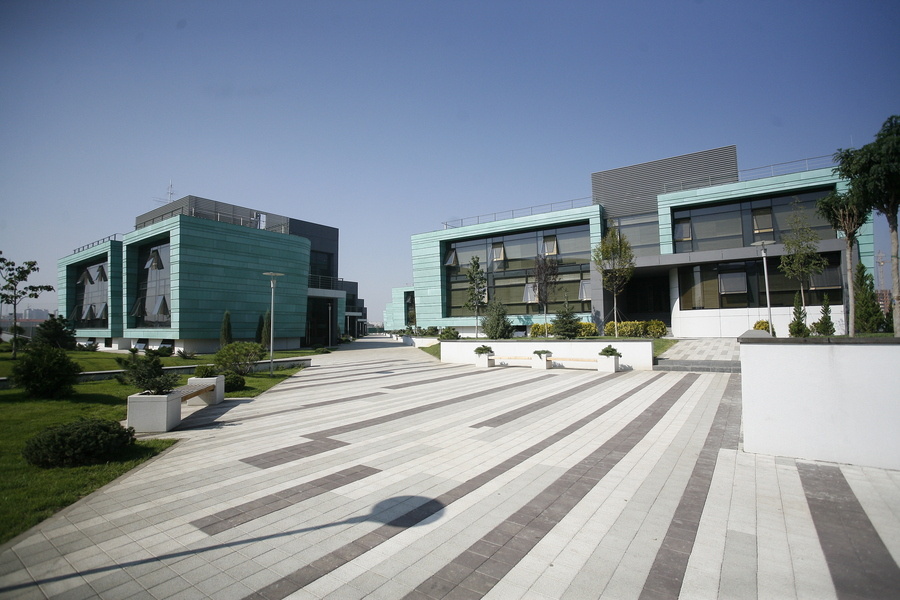
Residences at the FC Krasnodar Academy
Around Krasnodar there is a lot of talk about the players born in 2003 because they will be the first generation, which received all of its football training at the academy. The 2003 generation will be ready for the first team in 2018. The students at the academy are chosen between the ages of 6 and 12 from more than 20 Galitsky-sponsored clubs in the Krasnodar region.
In contrast to most Russian clubs, who use quick investments in foreign talent as the path to success, Krasnodar and Galitsky’s goal has been to have a team that consists of only local talent. This is obviously an easy, populist goal to announce, but Krasnodar actually seems like a club that can follow through. They are not a club that spends exorbitant amounts on stars. Instead, they try to sign young, cheap and hungry players like Movsisyan and Joãozinho, for whom they paid around €2,5 million. Movsisyan was later sold to Spartak Moscow for more than three times the amount Krasnodar paid, and Joãozinho has evolved into the club’s most important player and currently holds the record for most games played at the club.
Another good example of Krasnodar’s transfer policy is 23-year-old midfielder Yuri Gazinsky, who was signed from Torpedo Moscow for less than half a million euros, and has developed enough to be a regular in Fabio Capello’s national team squad.
With 25 games in the starting lineup, Gazinsky was one of the reasons behind Krasnodar’s excellent season last year, when they got their final breakthrough in the Premier League. Krasnodar did not get the best start to the season and decided to sack Muslin, but new coach Oleg Kononov managed to get them back on track, and they finished the season in an impressive fifth place, earning a spot in this season’s Europa league. They also reached the cup final, where they lost to Rostov on penalties. During the season, Krasnodar beat Dynamo and CSKA once each, and Spartak Moscow twice, proving that they can play with the big boys on their best days.
At the moment, Krasnodar rents their rival Kuban’s stadium, but this will not be necessary for long. In May of last year, they started construction on their own stadium. The stadium will be able to host 35,000 spectators and will be state of the art. Krasnodar has averaged about 12,000 fans per game since they were promoted to the Premier League. With a new stadium, this number should rise significantly.
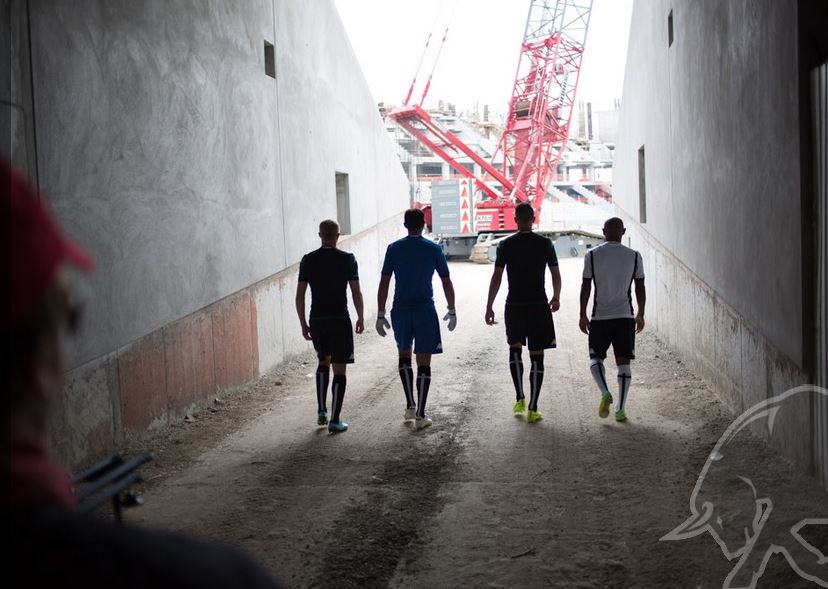
Entering FC Krasnodar’s new stadium
It has been six and a half years since Krasnodar got their license, and with local patriot Galitsky behind the wheel, their future definitely looks bright. In contrast to many clubs around the club, Krasnodar are blessed with a patient owner, who is not looking for easy and quick solutions, but instead has his eye on the long term. As Galitsky said when he opened his academy: “We aren’t seeking quick blast-offs, we want to develop gradually and get only what we deserve. We haven’t rushed to set up goals, either in business or in football. Our goal has been to understand how to act and then to move gradually.”
_____________________________________________________________________________________________________________________________
Follow Toke Theilade on Twitter: @TokeTheilade

Leave a Reply